
When to go
Kenya’s safari seasons
Kenya sits on the equator, so there is no winter or summer — the year is shaped by two dry seasons and two rainy ones. You can go on safari in any month; what changes is the scenery, the crowds and the price.
The year at a glance
-
Jan
Dry and warm
Best -
Feb
Dry and warm
Best -
Mar
Rains begin
Good -
Apr
Long rains
Wet season -
May
Long rains
Wet season -
Jun
Drying out
Good -
Jul
Migration arrives
Best -
Aug
Migration in the Mara
Best -
Sep
Migration in the Mara
Best -
Oct
Herds begin to leave
Best -
Nov
Short rains
Good -
Dec
Green; festive peak
Good
- Best conditions
- Good, fewer visitors
- Wet season, lowest prices
January – February
Short dry season
Warm, dry and clear. Grass is short, so animals are easy to find, and migrant birds are present in numbers. A good time for Amboseli and its mountain views.
March – May
Long rains
The wettest months, with rain mostly in the afternoon and overnight. The country turns green, visitor numbers drop and prices are at their lowest. Some roads become slow going.
June – October
Long dry season
The classic safari months: cool mornings, dry days and wildlife gathered around water. From about July the wildebeest migration arrives in the Maasai Mara. Book well ahead.
November – December
Short rains
Brief showers freshen the landscape without stopping game drives. November is quiet and good value; the Christmas and New Year weeks are busy again.
The Great Migration
When are the herds in the Mara?
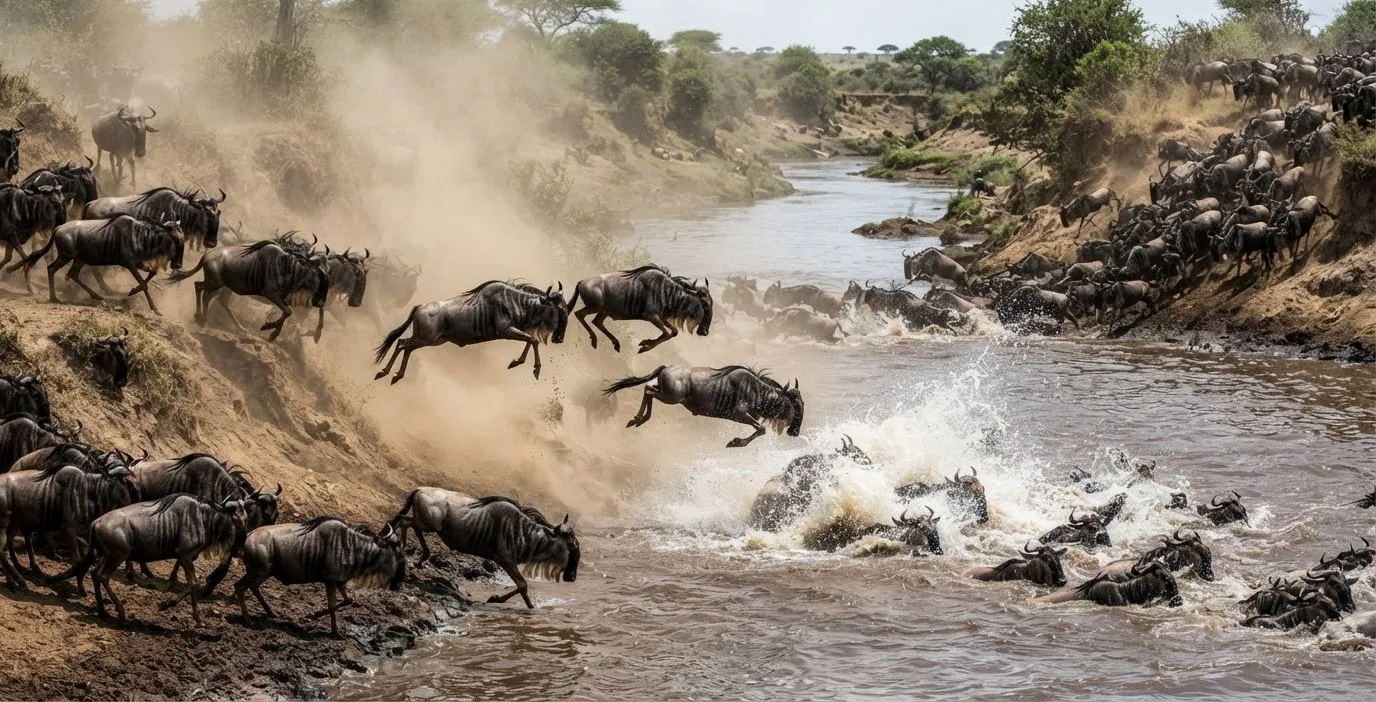
More than a million wildebeest and zebra move in a loop between Tanzania’s Serengeti and Kenya’s Maasai Mara, following the rain. They usually reach the Mara in July, stay through August and September, and drift south again during October.
River crossings happen throughout that period but never to a timetable — the herds decide. The longer you stay, the better your chances; we recommend at least three nights in the Mara if a crossing is what you are hoping for.
Timings shift a little every year with the rains. Ask us and we will tell you what guides on the ground are reporting.
Have dates in mind?
Tell us when you can travel and we will suggest where the wildlife viewing will be at its best.